
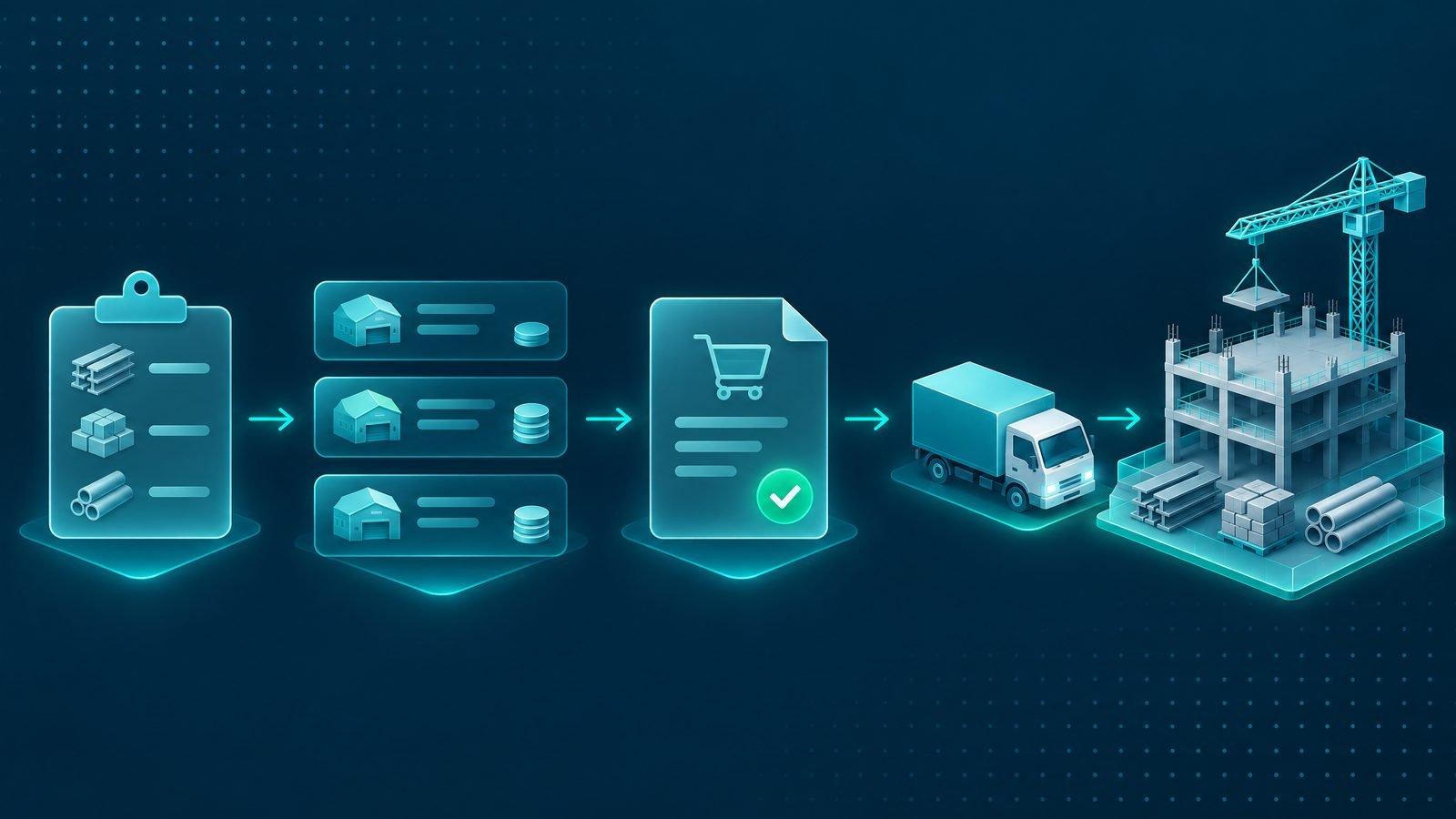
In brief: Understand the construction procurement process in Saudi Arabia, from material requests and supplier evaluation to purchase orders, delivery and cost control.
The construction procurement process in Saudi Arabia plays an important role in controlling project costs, maintaining material availability, and coordinating the activities of procurement, finance, and project teams. For contractors managing multiple projects, purchasing materials and services is not simply a matter of finding a supplier and issuing a purchase order. Every procurement decision must be connected to project requirements, approved budgets, delivery schedules, supplier commitments, and financial records. A structured procurement process helps Saudi contracting companies maintain better control over purchasing activities while reducing unnecessary delays and administrative confusion.
Whether a contractor is managing building projects in Riyadh, infrastructure works in Jeddah, industrial construction in Jubail, or multiple project sites across Dammam and Khobar, procurement needs a consistent process. The objective is to ensure that the right materials and services are purchased, approved, delivered, recorded, and allocated to the correct projects.
What Is Construction Procurement?
Construction procurement is the process of identifying, sourcing, purchasing, and receiving the materials, equipment, and services required to execute construction projects. It involves coordination between project managers, site engineers, procurement officers, finance departments, warehouse teams, and suppliers.
Unlike routine purchasing in a standard business, construction procurement is closely connected to project execution. A material requirement may originate from a site engineer, require approval from a project manager, pass through procurement for supplier evaluation, and then require financial authorization before an order is placed.
The process also needs to account for project-specific budgets, technical specifications, required quantities, delivery locations, and expected delivery dates. Without a defined procedure, different departments may work with incomplete information, making it difficult to monitor purchasing commitments and material availability.
Why the Construction Procurement Process in Saudi Arabia Matters
Saudi contractors often manage projects with different scopes, locations, suppliers, and execution requirements. Procurement decisions made for one project should not be confused with the requirements or financial commitments of another.
A structured procurement process provides several practical benefits for construction businesses.
Better Control Over Project Budgets
Every purchase affects the financial position of a project. Materials, services, equipment rentals, and other procurement expenses need to be associated with the appropriate project and cost category.
When purchasing is connected to project budgets, management can review planned expenditure alongside purchase commitments and actual costs. This helps CFOs and project directors identify purchasing activities that may require additional review before financial commitments are made.
Improved Material Availability
Construction activities depend on materials being available when required. Delayed purchasing decisions, incomplete requests, or poor coordination between site and procurement teams can affect the execution schedule.
A consistent procurement workflow helps project teams communicate their requirements earlier, allowing procurement officers to review specifications, obtain quotations, and coordinate deliveries according to project needs.
Stronger Supplier Management
Contractors frequently deal with different suppliers for materials, equipment, and specialized services. Maintaining organized supplier records makes it easier to review quotations, purchasing history, delivery records, and outstanding transactions.
It also gives procurement managers a more consistent basis for evaluating supplier offers and identifying suppliers that meet the project’s technical and commercial requirements.
Visibility Across the Construction Procurement Process in Saudi Arabia
Procurement involves several departments, and each department needs access to relevant information. Finance needs to understand approved commitments and supplier invoices, while project managers need to know which materials have been ordered and delivered.
A documented process reduces dependence on scattered emails, individual spreadsheets, and informal approvals. It creates a clearer record of how purchasing decisions are made and processed.
The Construction Procurement Process in Saudi Arabia: Main Steps
The exact purchasing workflow depends on the contractor’s organization and project requirements. However, most construction procurement activities follow a sequence of connected stages.
1. Identify Project Material and Service Requirements
The process begins when a project team identifies a requirement for materials, equipment, or services. This may originate from a project manager, site engineer, technical department, or warehouse team.
The request should clearly describe what is required, including:
- Material or service description.
- Technical specifications and required standards.
- Requested quantity and unit of measurement.
- Project name and cost allocation.
- Required delivery location.
- Expected delivery date.
- Supporting drawings or technical documents, where applicable.
Clear requests help procurement teams understand the actual requirement and reduce the need for repeated clarification. They also provide a reference for reviewing supplier quotations later.
2. Create and Review Purchase Requisitions
Once the requirement is identified, the requesting department prepares a purchase requisition. This document formally communicates the purchasing requirement to the procurement department.
Before processing the request, the responsible manager should review its purpose, quantity, specifications, project allocation, and budget availability. Incomplete or unclear requests should be returned for clarification rather than moving directly to purchasing.
For contractors operating several sites, it is important to maintain clear identification of the requesting project and department. This makes it easier to track the origin of each purchase and assign the resulting expenditure correctly.
3. Evaluate Suppliers and Obtain Quotations
After approving the requirement, procurement contacts suitable suppliers and requests quotations. Supplier evaluation should consider more than the quoted price.
Important comparison factors include:
- Price and total purchasing cost.
- Compliance with technical specifications.
- Product availability and delivery time.
- Payment terms and commercial conditions.
- Transportation and delivery arrangements.
- Supplier reliability and previous performance.
- Warranty or after-sales requirements, where relevant.
Comparing quotations using consistent criteria helps procurement managers explain their recommendations and provides management with a clearer basis for approving purchasing decisions.
4. Obtain Purchasing and Financial Approvals
Once supplier offers have been evaluated, the selected quotation and purchasing recommendation should be submitted for approval according to the company’s authority structure.
Approval responsibilities may depend on the purchase value, project budget, department, and type of material or service. A typical process may involve the project manager confirming the requirement, procurement reviewing the supplier offer, and the authorized management or finance representative approving the commitment.
Contractors should establish clear approval responsibilities so that purchases are neither delayed unnecessarily nor processed without the required authorization.
5. Issue the Purchase Order
Following approval, procurement issues a purchase order to the selected supplier. The purchase order records the agreed commercial and delivery conditions and serves as a reference for subsequent receiving and invoice verification.
A purchase order should generally include:
- Supplier details.
- Purchase order reference.
- Project and delivery location.
- Material descriptions and quantities.
- Agreed prices and applicable charges.
- Expected delivery date.
- Payment terms.
- Relevant technical and commercial conditions.
Maintaining a consistent purchase order process helps prevent informal purchasing commitments and gives finance and project teams a documented record of approved orders.
6. Receive and Inspect Materials
When materials arrive at a warehouse or project site, the receiving team should verify the delivery against the purchase order and relevant delivery documentation.
The inspection process may include checking quantities, descriptions, specifications, physical condition, and any required supporting documents. Differences should be recorded and communicated to procurement before the delivery is treated as complete.
Accurate receiving records are particularly important when materials are delivered directly to project sites in different locations, including Riyadh, Jeddah, Dammam, and Jubail.
7. Verify Supplier Invoices and Process Payments
After delivery, the supplier submits an invoice for processing. Finance should review the invoice against the purchase order and available receiving records before recording the payable amount.
This verification helps identify differences between ordered quantities, delivered materials, agreed prices, and invoiced amounts. Any discrepancies should be investigated and resolved through the company’s established procedures.
Once the invoice is verified and the required approvals are complete, it can proceed through the accounting and payment workflow.
How to Improve Procurement Cost Control in Construction Projects
Effective procurement management requires continuous coordination between purchasing decisions and project financial planning. The objective is not simply to negotiate lower prices but to understand the full financial impact of every purchase.
Connect Purchase Requests to Project Budgets
Every purchase request should be associated with the project that requires the materials or services. Where applicable, it should also be assigned to the relevant cost category or budget item.
This allows management to review how purchasing activity affects the available project budget and identify commitments that may require additional attention.
Monitor Committed Costs and Actual Costs
One important distinction in construction financial management is the difference between a purchase commitment and an actual recorded expense.
An approved purchase order represents a commitment to purchase goods or services. An invoice or payment represents a later stage in the financial process. Reviewing these separately helps management avoid overlooking outstanding purchasing obligations when assessing project costs.
Standardize Supplier Evaluation
Procurement teams should use consistent evaluation criteria when comparing supplier quotations. This improves transparency and makes it easier for management to understand why a supplier was selected.
Maintaining supplier information and purchasing records also helps companies review previous transactions when similar materials or services are required for future projects.
Coordinate Procurement with Site and Warehouse Teams
Procurement should not operate independently from project execution. Site teams need to communicate their requirements clearly, while warehouse teams should maintain accurate records of available stock and material movements.
Before creating a new purchase request, the responsible team should review whether the required materials are already available in an appropriate warehouse or another project location, subject to company policies and project requirements.
Common Construction Procurement Challenges
Even companies with experienced procurement departments can face operational difficulties when purchasing activities are not supported by consistent processes.
Unclear or Incomplete Purchase Requests
Requests that do not include sufficient technical information can lead to incorrect quotations, repeated clarification, and unsuitable purchasing decisions. Standardized request formats help ensure that procurement receives the information required to process each request.
Purchases Made Outside Approval Procedures
Informal purchasing arrangements can make it difficult to establish whether expenditure was properly authorized or allocated to the correct project. Clearly defined approval workflows help maintain accountability and improve financial oversight.
Limited Visibility into Outstanding Orders
When purchase orders are tracked through separate spreadsheets or communication channels, project teams may struggle to determine whether materials have been ordered, partially delivered, or remain outstanding.
A centralized purchasing record makes it easier to follow order status and coordinate with suppliers.
Disconnected Procurement and Accounting Records
When procurement and finance maintain separate records, reconciling purchase orders, deliveries, invoices, and payments can become unnecessarily difficult. Connecting these activities provides a more consistent view of purchasing commitments and financial transactions.
How Construction ERP Supports Procurement Management
A construction ERP can connect the procurement process with project management, financial records, and inventory operations. Instead of treating every purchasing activity as an isolated transaction, the system provides a shared workflow that allows authorized departments to follow the same information.
Centralized Purchase Requests and Approvals
Purchase requests can be recorded against specific projects and routed through the company’s approval structure. This provides a consistent record of who requested the materials, who reviewed the requirement, and who authorized the purchase.
Integrated Supplier and Purchase Order Records
Supplier details, quotations, purchase orders, and delivery information can be maintained within a connected system. Procurement managers can review purchasing activities without depending entirely on individual files and communication histories.
Procurement and Inventory Coordination
Connecting purchasing with inventory records helps warehouse and procurement teams understand material availability and follow incoming deliveries. This supports more informed purchasing decisions and improves the visibility of stock movements.
Project-Based Financial Reporting
When procurement transactions are associated with projects and cost categories, management can review purchasing commitments alongside actual expenses. CFOs and project directors gain a more organized basis for evaluating project financial performance.
For a broader overview of how these functions work together, read our guide to ERP for construction companies in Saudi Arabia.
Building a More Organized Procurement Process with IntellaQ Flow
IntellaQ Flow builds custom ERP systems for Saudi contractors, helping connect operational and financial activities within workflows designed around the company’s requirements.
For construction businesses, procurement needs to work alongside project management, cost control, and finance. A centralized approach can help companies organize purchase requests, purchasing approvals, supplier transactions, and project-related financial information within one system.
IntellaQ Flow’s construction solutions are designed for Saudi business requirements, with Arabic-first interfaces and RTL screens, alongside support for Hijri and Gregorian dates and relevant business workflows.
For companies reviewing their procurement operations, the construction procurement and materials management solution provides a relevant starting point for understanding how purchasing activities can be organized within a construction-focused system.
Contractors can also explore the wider ERP solution for construction and contracting companies to understand how procurement connects with other business functions.
The appropriate system configuration depends on the company’s project structure, procurement procedures, approval requirements, and reporting needs. Companies evaluating implementation can review the construction ERP pricing information and discuss the required scope before making a decision.
Conclusion: Making Procurement a Controlled Business Process
Procurement has a direct connection to construction project execution and financial performance. A reliable construction procurement process in Saudi Arabia begins with clear material requirements and continues through supplier evaluation, approvals, purchase orders, receiving, invoice verification, and payment processing.
For Saudi contractors managing projects across different cities and locations, establishing consistent purchasing procedures helps improve coordination between project teams, procurement departments, warehouses, and finance.
The most effective approach is to connect procurement decisions with project budgets, supplier records, inventory information, and financial reporting. This gives management a clearer understanding of purchasing activity and creates a more organized foundation for controlling project expenditure.
Looking to improve procurement management in your contracting business? Speak with IntellaQ Flow about your operational requirements and explore how an integrated construction ERP can support your purchasing workflows.
Request a construction ERP demo with IntellaQ Flow to discuss your procurement process and the requirements of your projects.
Common questions
What is the construction procurement process in Saudi Arabia?
It is the sequence of activities contractors follow to identify project requirements, request materials or services, evaluate suppliers, obtain approvals, issue purchase orders, receive deliveries and process supplier invoices. A structured process connects purchasing decisions with project budgets and execution requirements.
What are the main stages of construction procurement?
The main stages include identifying material requirements, preparing purchase requests, obtaining supplier quotations, evaluating offers, securing approvals, issuing purchase orders and recording deliveries. Invoice verification and payment processing complete the purchasing cycle.
How can contractors improve procurement cost control?
Contractors can improve cost control by linking purchase requests and orders to project budgets, comparing supplier quotations and monitoring committed expenditure. Regular reviews help identify purchasing differences before they affect project financial performance.
How does construction ERP software help manage procurement?
Construction ERP connects purchase requests, supplier information, approvals, purchase orders, inventory and financial records. This gives procurement and finance teams a more consistent view of purchasing activities across projects.
More on construction procurement process in Saudi Arabia
- ERP for Construction Companies in Saudi Arabia: A Practical Guide
- Construction procurement software for Saudi Arabia from requisition to three-way match
- Contracting
- Construction Inventory Management: A Practical Guide for Saudi Contractors
- Construction Approval Workflows: A Practical Guide for Contractors