In brief: Learn construction equipment tracking methods to monitor machinery, control equipment costs, manage site transfers and improve asset utilization.
Construction equipment tracking helps contractors maintain visibility over the machinery, vehicles, and equipment used across their projects. For Saudi construction companies managing several sites, equipment may be owned by the business, rented from external providers, or assigned to specific contracts for different periods. Without organized records, it becomes difficult to know where equipment is located, whether it is available, who is responsible for it, and how much it costs to operate. A structured tracking process gives owners, project directors, and equipment managers better control over these assets and supports more informed decisions about allocation, maintenance, and project expenses.
From infrastructure projects in Riyadh and industrial construction in Jubail to contracting operations in Jeddah, Dammam, and Khobar, machinery availability can directly affect project execution. Contractors need a reliable process for recording equipment assignments, monitoring movements, managing maintenance, and reviewing utilization across the business.
What Is Construction Equipment Tracking?
Construction equipment tracking is the process of recording and monitoring the location, assignment, availability, condition, and operational history of machinery and equipment used in construction activities.
It can cover a wide range of assets, including excavators, loaders, cranes, forklifts, generators, compressors, trucks, concrete equipment, and specialized machinery. The exact equipment register depends on the contractor’s operations and the assets required for its projects.
Tracking does not necessarily mean using GPS technology for every asset. At a basic level, it involves maintaining accurate equipment records and documenting important transactions such as project assignments, transfers, maintenance activities, and returns. More advanced operations may incorporate GPS devices, telematics, or other monitoring technologies where appropriate.
The objective is to give management a consistent understanding of the company’s equipment resources and how they are being used.
Why Construction Equipment Tracking Matters for Saudi Contractors
Equipment represents an important operational and financial resource for construction companies. Machinery that is unavailable, incorrectly assigned, or poorly maintained can create difficulties for project teams and affect the company’s ability to plan work effectively.
Improving Construction Equipment Tracking Across Multiple Sites
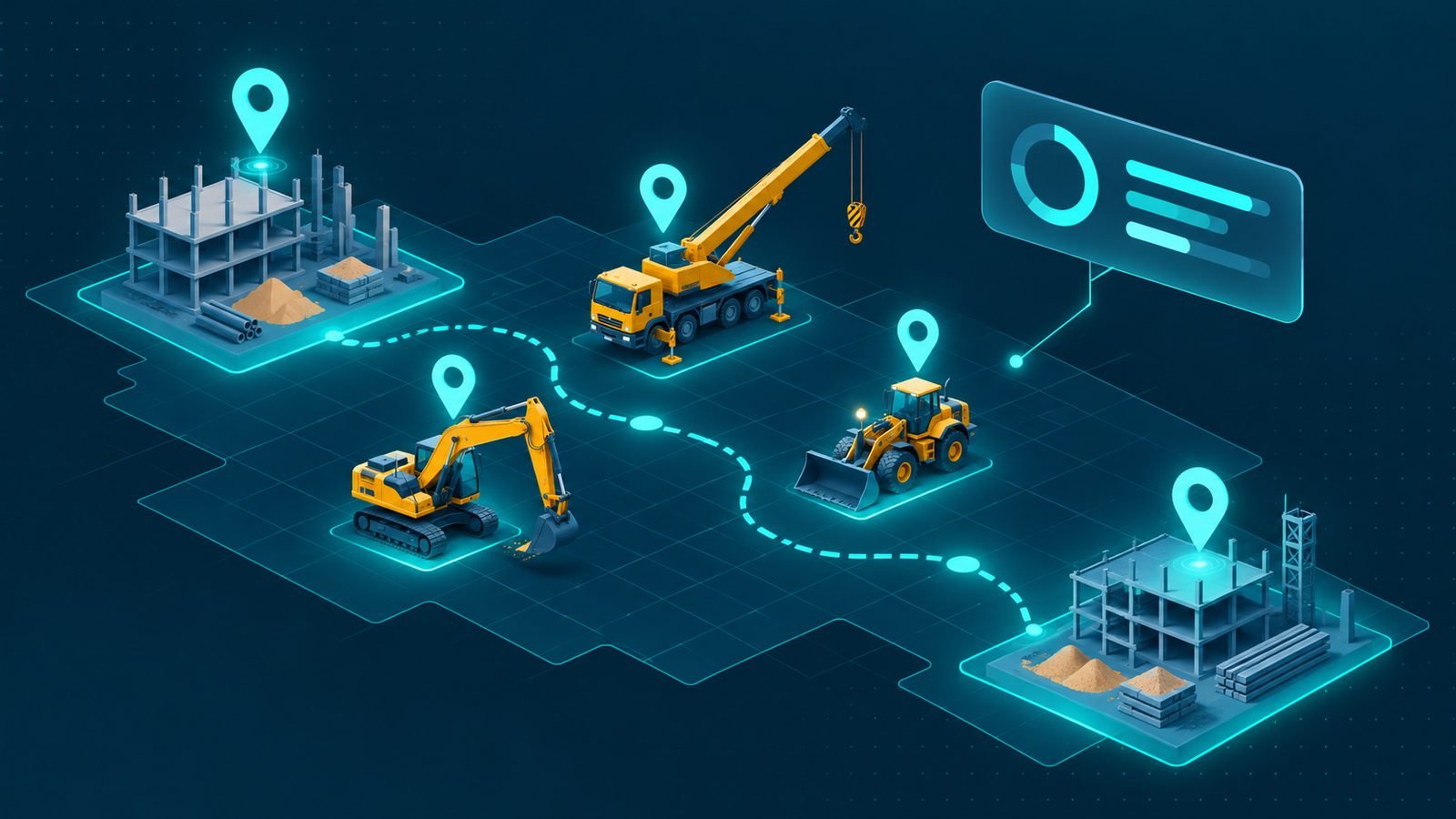
Contractors managing several projects need to know where their equipment is located and which project is currently using each asset. A machine assigned to one site may be required at another location, but transferring it without proper records can create confusion between project teams.
Maintaining equipment assignments and movement records allows management to review asset locations and responsibilities across projects in different cities, including Riyadh, Jeddah, Dammam, and Jubail.
Reducing Unnecessary Equipment Rental
When contractors have limited visibility into their existing equipment, they may arrange additional rentals without first confirming whether suitable machinery is available elsewhere within the business.
Reviewing equipment availability before approving rental requests helps management make better use of existing assets and evaluate whether renting or reallocating equipment is more appropriate.
Controlling Equipment-Related Costs
Construction machinery generates several types of expenses, including fuel, maintenance, spare parts, transportation, operator costs, and rental charges where applicable.
Recording these expenses against individual assets and projects gives finance teams a better basis for reviewing equipment-related expenditure. Project directors can also investigate whether machinery costs are consistent with the project’s operational requirements.
How to Establish a Construction Equipment Tracking Process
An effective tracking process begins with an accurate equipment register and clearly defined responsibilities. Contractors should establish how assets are identified, assigned, transferred, inspected, and maintained.
1. Create a Central Equipment Register
Every significant asset should have an individual record containing its identification details and relevant operational information.
Depending on the equipment type, the record may include:
- Equipment name and category.
- Unique asset or identification number.
- Manufacturer and model.
- Serial number, where available.
- Ownership or rental status.
- Purchase or rental information.
- Current project and location.
- Responsible department or employee.
- Maintenance and inspection history.
A centralized register provides a consistent reference for equipment managers, project teams, and finance departments. It also helps prevent confusion when similar machines are used across different sites.
2. Record Equipment Assignments to Projects
When machinery is assigned to a project, the transaction should identify the asset, receiving location, assignment date, responsible person, and expected period of use where applicable.
This creates a record of which project is using each machine and helps project directors review equipment availability when planning upcoming activities.
3. Track Equipment Transfers Between Sites
Equipment movements should be documented whenever machinery is transferred between projects, warehouses, or storage locations.
A transfer record should identify the original location, destination, equipment reference, movement date, and responsible personnel. Where relevant, the condition of the equipment should also be recorded before dispatch and after receipt.
These records are particularly useful for contractors operating across multiple locations in Saudi Arabia, where equipment may move between projects in different cities.
4. Monitor Equipment Availability and Operating Status
Knowing the physical location of a machine is not enough. Project teams also need to understand whether it is operational, undergoing maintenance, awaiting repair, or available for another assignment.
Establishing clear equipment status categories helps management avoid assigning machinery that is unavailable or unsuitable for the required activity.
5. Maintain Equipment Movement History
A complete movement history helps companies understand how equipment has been used over time. It can show previous project assignments, transfers, maintenance periods, and returns.
This information provides a useful reference when investigating equipment availability, reviewing utilization, or planning future project requirements.
Equipment Utilization: Understanding How Machinery Is Being Used
Equipment utilization is an important consideration for contractors because the cost of machinery does not depend only on its purchase or rental price. Management also needs to understand whether the asset is being used effectively.
Monitor Operating Hours
Recording operating hours helps companies understand how frequently equipment is used. Depending on the machinery, readings may come from manual records, operator reports, hour meters, or connected monitoring devices.
Consistent operating-hour records can support maintenance scheduling and help project managers evaluate equipment usage during different stages of execution.
Identify Idle Equipment
Equipment that remains unused for extended periods may represent an opportunity for reassignment, particularly when another project requires similar machinery.
Reviewing assignment records and operational status helps management identify assets that may be available for other work or require a different utilization plan.
Compare Equipment Usage with Project Requirements
Project directors should review equipment assignments against planned activities and actual execution requirements. This helps identify whether machinery is being allocated appropriately or whether alternative arrangements should be considered.
For example, equipment assigned to a completed activity may be required by another project. Without updated records, it may remain associated with its previous location even though it is no longer needed there.
Construction Equipment Maintenance and Asset Control
Equipment tracking should be connected to maintenance management. A machine may be physically available but not suitable for operation if it requires inspection, servicing, or repair.
Establish Equipment Maintenance Records
Each asset should have a maintenance history that records servicing activities, reported faults, replacement parts, and repair work. This helps equipment managers understand the condition of machinery and review its maintenance requirements.
Schedule Preventive Maintenance
Preventive maintenance should follow the applicable equipment requirements and maintenance recommendations. Depending on the asset, scheduling may be based on operating hours, calendar intervals, or other manufacturer and operational guidelines.
Keeping maintenance records connected to equipment assignments helps project teams understand when machinery may be unavailable and plan alternative resources where necessary.
Monitor Maintenance Expenses
Maintenance costs should be recorded against the relevant equipment asset and, where appropriate, the project responsible for the expense.
This provides finance and operations teams with a clearer picture of equipment-related expenditure and supports decisions about repairs, replacement, or future asset requirements.
Common Equipment Management Challenges for Contractors
Many equipment management difficulties arise because information is maintained by different departments without a consistent recording process.
Unclear Equipment Ownership and Responsibility
When asset records do not identify ownership, rental status, or responsible employees, it becomes harder to determine who should manage equipment availability and related obligations.
Maintaining complete asset records helps clarify these responsibilities.
Equipment Transfers Without Documentation
Moving machinery between project sites without recording the transaction can result in inaccurate location records and disagreements between teams. A documented transfer process provides a clearer movement history.
Limited Visibility into Rental Equipment
Rented machinery should be recorded separately from owned assets, with relevant rental terms, assigned locations, and expected return dates. This helps contractors monitor rental commitments and coordinate returns when equipment is no longer required.
Disconnected Maintenance and Financial Records
When maintenance expenses are recorded separately from equipment information, it can be difficult to review the total cost associated with individual assets.
Connecting equipment records with maintenance and financial transactions provides better visibility for management.
How Construction ERP Supports Equipment Management
A construction ERP can bring equipment records, project assignments, maintenance activities, and financial transactions into one connected environment. This reduces the need for different departments to maintain separate equipment spreadsheets and disconnected records.
Centralized Equipment Information
Authorized employees can access equipment details, asset assignments, locations, status information, and maintenance history according to their responsibilities.
Integrated Project and Equipment Assignments
Connecting equipment records with project information helps managers review which assets are assigned to each contract and where they are currently located.
Equipment Cost and Maintenance Reporting
Linking maintenance expenses and other equipment costs to individual assets gives finance teams a more organized basis for reporting and reviewing expenditure.
For a wider understanding of how equipment management connects with project operations, procurement, and finance, read our guide to ERP for construction companies in Saudi Arabia.
Improving Construction Equipment Tracking with IntellaQ Flow
IntellaQ Flow builds custom ERP systems for Saudi contractors, with business workflows designed around their operational and financial requirements.
For construction companies managing owned and rented machinery across several projects, equipment management can be considered alongside project operations, procurement, costs, and finance. This provides a more organized way to maintain asset records, monitor assignments, document movements, and review equipment-related expenses.
IntellaQ Flow also provides a construction-focused equipment and plant management solution through Tender Mind AI. Contractors can explore the construction equipment and plant management solution to understand how equipment-related activities can be organized within their operations.
Companies looking for a broader business management approach can also review the ERP solutions for Saudi contracting companies, covering the wider operational requirements of construction businesses.
Conclusion: Better Equipment Visibility Across Every Project
Construction equipment is a valuable operational resource, and managing it effectively requires more than maintaining a list of machinery. Contractors need to know where equipment is located, which projects are using it, whether it is available, and what maintenance or financial commitments are associated with each asset.
A structured construction equipment tracking process connects asset records with project assignments, transfers, operating status, maintenance history, and equipment-related costs. These records help owners, project directors, and equipment managers make more informed decisions about machinery allocation and utilization.
For Saudi contractors operating across Riyadh, Jeddah, Dammam, Khobar, and Jubail, centralized equipment information can improve coordination between sites and support better planning as project requirements change.
Looking to improve equipment visibility and control across your construction projects? Discuss your requirements with IntellaQ Flow and explore how an integrated construction ERP can support your equipment management processes.
Request a construction ERP demo with IntellaQ Flow to discuss your equipment tracking and management requirements.
Common questions
What is construction equipment tracking?
It is the process of monitoring construction machinery, equipment locations, assignments, operating status, movements and maintenance records. It helps contractors understand which assets are available and how they are being used across projects.
Why is equipment tracking important for construction companies?
Tracking equipment helps contractors improve asset visibility, coordinate machinery between project sites and monitor equipment-related expenses. It also supports better planning for maintenance, utilization and future equipment requirements.
How can contractors track equipment across multiple construction sites?
Contractors can maintain centralized equipment registers with individual asset records, assigned locations, responsible employees and movement histories. Depending on operational requirements, tracking can also incorporate GPS or other equipment monitoring technologies.
Can construction ERP software manage heavy equipment?
A construction ERP can connect equipment records with projects, costs, assignments, maintenance activities and operational reporting. This gives management a more organized view of equipment utilization and ownership or rental-related expenses.
More on construction equipment tracking
- ERP for Construction Companies in Saudi Arabia: A Practical Guide
- Equipment management software for construction in Saudi Arabia built around cost, not tracking
- Contracting
- Managing Subcontractors in Construction: A Practical Guide for Saudi Contractors
- Construction Inventory Management: A Practical Guide for Saudi Contractors